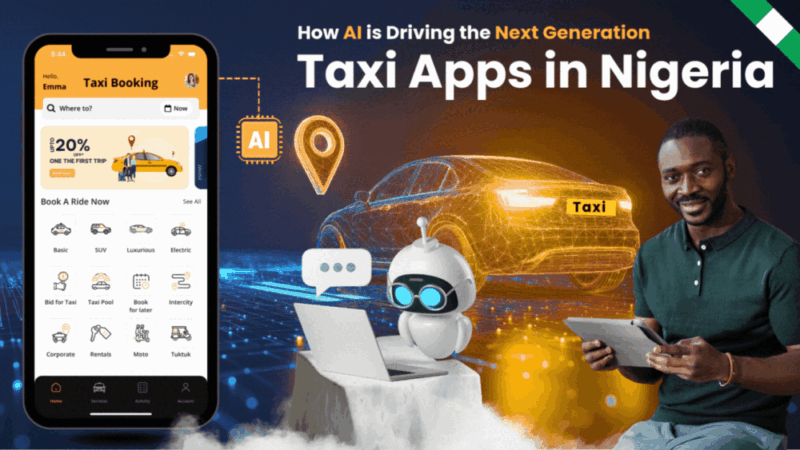
Most people imagine the AI story to consist of futuristic robots, self-driving cars, or maybe that voice assistant that will just not say your name correctly. But in Nigeria, the story of AI is being played out on the streets with the rise of smarter, quicker, and safer Taxi Booking Apps. Needless to say, AI is not just for Silicon Valley showrooms; now it is commanding a taxi through Lagos traffic, tweaking prices in Abuja, and helping entrepreneurs be successful in building next-generation taxi platforms throughout the country.
It is a bright sunny Monday morning in Lagos; the sun is blazing, and the roads have filled up. You are late for an important meeting, but you pull out your phone, open a Taxi Booking App, and within seconds, your ride has been dispatched. In the background, artificial Intelligence might be pulling some invisible strings to connect you with a suitable driver, taking shortcuts through traffic, and paying the driver the best fare.
Welcome to the new era of Taxi Apps in Nigeria, where AI is not just a feature but is the need for the entire operation.
A Bit About the Nigerian Taxi Market
Nigeria is Africa’s largest economy and its most populous country, with over 220 million people and rapidly growing urban centers like Lagos, Abuja, and Port Harcourt. Every day, millions need to move around for work, school, and business. Traditional taxis and keke napeps (tricycles) are part of the culture, but the increase of smart phones usage and internet penetration has ready made ride-hailing apps more attractive.
Companies like Bolt and Uber have already tapped into this demand, but the Nigerian market is far from saturated. Local startups are joining the race, and the differentiator is no longer just having a mobile app. The winners will be those who leverage AI to make rides smarter, safer, and smoother.
Because let’s face it, Nigerian passengers don’t just want a ride; they want reassurance that they won’t get stuck in traffic purgatory, overcharged unexpectedly, or matched with a driver who couldn’t find their pickup spot even with GPS screaming directions.
Why AI is the Secret Sauce of Driving Your Next Generation Taxi Apps in Nigeria?
AI is everywhere, helping Netflix suggest movies, powering Siri’s cheeky answers, and even predicting your next grocery order. However, in the taxi booking app sector, AI is not just a convenience; it is the engine that solves core problems.
Let us see exactly how your Taxi Apps in Nigeria with AI features are helping solve problems.
Instant Ride Matching Means No More “Your Driver is 20 Minutes Away”
AI doesn’t just find a driver; it finds the best possible driver in seconds. Going through the live location, route options, and even the probability of cancellations. AI make sure the rides are matched faster and smarter.
For users, this means
- Fewer delays
- More completed trips
- Less uncertainty
For businesses, it translates into higher booking completion rates and, ultimately, bigger profits.
AI Heat Maps Mean Where the Riders Are, Before They Even Tap
In Nigeria, drivers often drive around empty, hoping to find a ride. Waste of fuel, waste of time. AI heat maps flip the script.
With heat maps, your Taxi Booking App will show:
- Where demand is about to rise (e.g., near market closing time).
- Which areas need more drivers right now?
- Where to send targeted promos to riders.
It’s like giving drivers a sixth sense and giving your business a head start.
Dynamic Pricing is All About Love It or Hate It, It Works
There is a situation every Nigerian know about. When an event ends whether it’s a Burna Boy concert or a Super Eagles match demand for taxis skyrockets. Traditional systems can’t handle that spike.
AI-powered dynamic pricing adjusts fares automatically by analysing:
- Real-time demand and supply.
- Weather conditions (rain = everyone wants a ride).
- Traffic situations.
- Local events.
Passengers may grumble a little about higher prices, but they will still book because availability matters more than anything. Meanwhile, drivers restrain their energy and strive to earn as much as possible by working during the peak hours.
Smart Discounts, So Personalization Is Everything
Marketing in Nigeria is a tricky affair-very savvy customers and generic promos simply do not work. Smart-discount engines use AI to customise offers for every single rider.
Examples:
- A comeback discount goes to a passenger who has not booked in a week.
- The airport ride deals are offered to an airport traveler.
- SUV promotions are targeted at the group rider.
The personalized incentives keep the customers loyal and maintain their lifetime value, saving any extra costs that would have gone into manual work from your marketing squad.
User Experience: Smooth, Seamless, and One Smart Taxi Ride in Nigeria
Right now, turn around and look through the eyes of the passenger. Whatever smartening up goes in at the back end, the clients really enjoy the ride.
A rider logs in, whether through email, Google, or Apple and enters pickup and drop-off details. Maybe they’re coming from Murtala Muhammed International Airport and heading to an Airbnb in Lekki. Within seconds, the AI function presents them with options of a standard sedan, an SUV, or a moto, if they’re bringing the entire extended family.
The magic lies in transparency. The user sees upfront pricing, estimated arrival times, travel duration, and even comfort notes. Need a child seat? Done. Prefer a driver who speaks Yoruba or Hausa? Sorted. Prefer a taxi with handicap accessibility.
Payment happens the awkward haggling or fumbling fare at the end of the ride. And behind the scenes, AI dispatch ensures the best driver is matched instantly, considering everything from traffic patterns to driver ratings.
On ride day, reminders ping the passenger. The driver gets real-time info. Both know exactly where to meet. No confusion, no missed connections. After the ride, passengers can leave reviews, rate the trip, and even download invoices, perfect for business travelers filing expense reports.
This isn’t just convenience it’s AI ensuring that every step feels smooth, reliable, and trustworthy.
Your 14-Day AI-Powered Taxi App Checklist
Think of this as your sprint plan because in just two weeks, you could be the proud owner of an AI-fueled Taxi App in Nigeria. Forget endless boardroom meetings and 200-slide presentations. This is your no-nonsense, let ’s-get-it-done roadmap.
1. Pick a clone provider that knows its onions. You want a multi-category platform, whether it’s taxi rides, groceries, pharmacy runs, or even flowers for the forgetful husbands of Lagos. AI thrives on variety, so give it a playground.
2. Define your categories. Start small, two or three services are enough to begin. Expansion comes later once your AI has chewed on some data.
3. Branding matters. Nigerians love apps with personality. From logos to colors, AI-powered design tools can help predict what vibes your audience will love.
4. Vendors and drivers. Don’t go crazy, just a handful per category is enough for launch. AI onboarding will flag fraudsters before they sneak in.
5. Payment setup. In app wallet, cards, cash-on-delivery, Nigeria’s financial system. AI-backed fraud detection ensures smooth, worry-free payment transactions.
6. Test like a maniac. Place dummy orders, cancel them, test tracking, chat, and notifications. Let AI simulate chaos before real customers do.
7. Soft launch. Don’t try to conquer Lagos on day one. Start in one neighborhood, let AI gather insights, then expand.
And that’s it: 14 days, one checklist, and you’re in the AI-driven taxi business. Not bad for a fortnight’s work, right?
Conclusion
AI isn’t science fiction it’s already shaping how Nigerians move around. For entrepreneurs building Taxi Booking Apps in Nigeria, AI is the difference between being just another app and being the app that dominates the market.
From intelligent dispatching to smart discounts, AI ensures your platform delivers speed, safety, and satisfaction. Passengers trust you. Drivers stick with you. And your business grows faster than the traffic jam at Ojota. In short, AI isn’t just driving taxis, it’s driving the future of mobility in Nigeria.

Uber App Clone introduces the great taxi on demand business solution by launching a Uber App Clone providing white-labeled uber clone apps available in different languages and currencies.