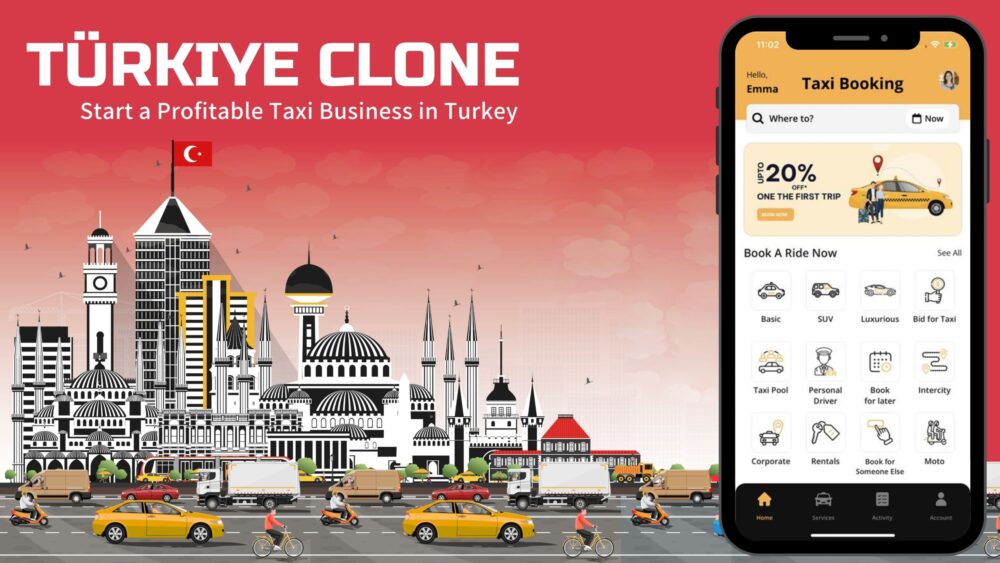
There’s something quietly magnetic about Turkey’s cities. People move. Goods move. Life moves. And where there’s movement, there’s opportunity. The last decade has changed how Turks travel. Digital payments are now the norm, smartphones sit in every pocket, and waiting by the roadside waving for a taxi feels… outdated. Apps like BiTaksi and Uber paved the way, showing that Turkey was ready for digital mobility. Now, a new wave of entrepreneurs wants in, not as passengers, but as business owners. Enter the Türkiye Taxi Clone, a ready to launch taxi app solution built to mirror the success of leading Turkish platforms while giving you full ownership, branding, and scalability.
But before you jump in, there’s a big truth to face: the taxi app business is booming, yes, but not all clones or developers are equal.
In Turkey’s rapidly evolving mobility market, who you build with matters more than what you build.
Why Turkey Is a Goldmine for türkiye taxi clone
Let’s be blunt, Turkey’s transport network is massive.
That’s where the taxi app in Turkey comes in. It solves three big pain points:
- Predictability, riders know the price before they ride.
- Safety, verified drivers, tracked routes.
- Convenience, bookings in seconds, not minutes.
A Türkiye Taxi Clone leverages this demand, but instead of starting from scratch, you use a pre built, customizable platform that’s already tested in real world conditions.
You add your logo, tweak pricing, integrate local payment gateways, and launch it under your own brand.
Sounds simple, right? It can be, if you partner with the right development company.
Choosing the Right Partner: The 15 Year Rule
Let’s slow down here because this part makes or breaks the business.
If you’re investing in a Türkiye Taxi Clone, don’t chase the cheapest quote. The taxi app market is full of developers offering “ready made apps” for a few thousand dollars. Most of those apps, though, crumble the moment you try to scale or launch on the App Store.
The golden rule?
Only work with companies that have at least 10–15 years of experience building and launching on demand apps.
Here’s why:
- They’ve survived tech transitions. From iOS 9 to iOS 18, from PHP to Node.js, they’ve seen everything and adapted.
- They know the app stores inside out. Getting approved on the App Store in Turkey requires precise compliance, seasoned teams know how to avoid rejections.
- They understand localization. A veteran company knows how to design for Turkish users, right language, right flow, right feel.
- They won’t vanish. Too many small developers disappear after delivery, leaving entrepreneurs stranded with bugs and no support.
Experience in this industry isn’t just a number. It’s insurance.
The Business Logic Behind a Türkiye Taxi Clone
A Türkiye Taxi Clone gives you the business foundation without the tech headache.
What You get:
- A passenger app that allows riders to book, track, and pay for taxis.
- A driver app for partners to manage trips, payments, and earnings.
- An admin dashboard for you, the business owner, to oversee operations, set fares, track revenue, and manage users.
You own it. Brand it. Scale it.
But what really matters isn’t the software, it’s what you do with it. The Turkish taxi app market rewards entrepreneurs who understand local behaviour.
Think:
- Airport transfers during tourist peaks
- Corporate ride contracts for offices in Levent
- Subscription based plans for daily commuters
A well configured Türkiye Taxi Clone can support all those models from day one.
Avoiding Common Mistakes When Building a türkiye taxi clone
Let’s be real, many first time founders mess this up.
They rush and buy a cheap script. They launch without understanding the ground reality.
Here’s what to avoid:
- Skipping Market Research
Each Turkish city behaves differently. Spend time studying how people commute locally before finalizing features. - Ignoring Payment Preferences
Turkish users love digital wallets and QR payments. If your taxi app doesn’t integrate options like Troy, Masterpass, or bank linked cards, you’ll lose half your riders instantly. - Choosing a Generic Developer
Never work with a company that’s “trying out” app development. Go for those who’ve launched multiple taxi, food delivery, and logistics apps. Longevity signals reliability. - Not Owning the Source Code
If your development partner keeps the code, you’re renting your business. Insist on full code ownership, that’s your long term asset. - Skipping Post Launch Support
Bugs appear, APIs change, app store rules evolve. You need a partner that offers at least 6–12 months of post launch maintenance.
A taxi app isn’t a “set it and forget it” product. It’s a living system that needs updates, monitoring, and continuous care.
The Turkish Way: Localizing for Trust and Growth
Trust drives business in Turkey.
People want local names they can pronounce, customer service that speaks their language, and apps that understand their daily routes.
When you launch your taxi app in Turkey, your goal isn’t just technology, its familiarity.
That means:
- Displaying prices in Turkish Lira (₺)
- Using Turkish language for all notifications and UI text
- Supporting local navigation via Yandex Maps or Mapbox
- Offering in app chat between drivers and riders in Turkish
- Creating Turkish social media pages for local credibility
Even your brand name matters. Something short, pronounceable, and distinctly Turkish connects faster with riders and drivers alike.
Localization isn’t just marketing polish. It’s your ticket to trust.
Behind the Scenes: How a Reliable Developer Builds It Right
An experienced developer doesn’t just hand you an app. They guide you through the entire lifecycle.
Here’s what a 10–15 year veteran team typically does differently:
- Market Adaptation – They study Turkish taxi regulations and fare models before writing code.
- Architecture Design – They build scalable systems that handle thousands of concurrent users without lag.
- Testing Protocols – They simulate real rides to ensure the GPS and tracking systems stay accurate in dense areas like Beyoğlu or Kadıköy.
- App Store Strategy – They optimize listings in Turkish, ensuring your taxi app clears Apple and Google’s review filters quickly.
- Post Launch Monitoring – They track analytics, fix early bugs, and push updates without downtime.
It’s not just development; its craftsmanship refined over years.
Building Brand Trust from Day One
Turkish users are cautious about digital services, and rightly so. Data privacy, ride safety, and payment security all matter deeply here.
To build trust early:
- Use real driver verification with government ID and license upload.
- Add live trip sharing so riders can send their route to family.
- Partner with local taxi unions for credibility.
- Maintain 24/7 customer support (Turkish speaking agents, not bots).
- Display a clear refund or complaint policy inside the app.
These small choices turn one time users into loyal advocates.
Monetization: Making the Numbers Work
A Türkiye Taxi Clone isn’t just a tech play, it’s a business model.
There are multiple revenue streams you can activate:
- Commission per ride (a small percentage from drivers)
- Subscription plans for drivers to access premium features
- Corporate contracts with companies for regular rides
- In app ads or partnerships with fuel stations, cafes, or hotels
A mature app development partner can integrate all of this from day one. You decide the mix. They make it work.
Expanding Beyond the First City
Start in one city, maybe Istanbul, where digital mobility adoption is highest, but plan your architecture for national expansion.
Turkey’s geography supports multi city scaling beautifully.
Your Türkiye Taxi Clone can be configured with:
- Independent fare zones for each city
- Separate driver groups per region
- Localized offers (for example, free rides during Konya festivals)
This approach builds resilience and brand recognition across regions.
Why Experience Is Worth Paying For
Let’s talk money for a second.
Yes, an experienced development firm might cost more.
But what you’re really buying is stability.
A team with 10–15 years in the industry already knows how to handle the thousand little details that destroy start ups, from database scaling to API version mismatches.
They’ve built apps that survived App Store rejections, handled surges during Ramadan, and integrated payments that actually work in Turkey’s ecosystem.
When they say “two week delivery,” they mean it, because they’ve done it hundreds of times before.
You’re not paying for code; you’re paying for peace of mind.
Future Proofing Your türkiye taxi clone
A successful taxi app isn’t just about the launch. It’s about what comes after.
Here’s how experienced developers help you future proof:
- Regular Updates – They push updates for every new Android and iOS version.
- Feature Add Ons – You can add parcel delivery, rentals, or carpooling later.
- Analytics Dashboards – Track peak times, driver efficiency, and user retention.
- Scalability Testing – Prepare your app to handle 10× traffic growth smoothly.
When your partner knows this industry inside out, your business becomes sustainable, not seasonal.
A Note on Reputation
Turkey’s tech scene is tight knit. Word spreads fast, both good and bad.
That applies to your app and your development partner.
Choose a firm with verified case studies, real client reviews, and live apps in the Play Store and App Store. Ask for demo links. Check their app ratings.
A reputable company isn’t afraid to show what they’ve built.
And if they’ve been in this field for 10–15 years, chances are they already have a few success stories in their portfolio that mirror exactly what you’re trying to achieve.
From Idea to Launch: A Sample Timeline
Here’s how a professional team usually handles your Türkiye Taxi Clone:
- Week 1–2 – Requirement gathering, UI design mock ups, branding setup.
- Week 3–4 – Backend configuration, driver and rider app customization.
- Week 5–6 – Testing, payment integration, localization in Turkish.
- Week 7 – App Store submission, final review.
- Week 8 – Live launch and post launch monitoring.
That’s roughly two months, a fraction of what traditional app builds take.
Final Thoughts: Building Smart, Building Strong
The Türkiye Taxi Clone isn’t just software. It’s a springboard for entrepreneurs who want to build serious mobility businesses in one of the world’s most dynamic markets.
But remember, the strength of your app depends entirely on the strength of your development partner.
In Turkey’s fast growing on demand economy, shortcuts won’t last. What lasts is experience, reliability, and thoughtful execution.
So, take your time. Find a partner with a decade or more of proven launches, a solid record of Play Store and App Store approvals, and a reputation for post launch support. When you do, your taxi app in Turkey won’t just be another app on the screen.
It’ll be the next local success story, connecting people, powering businesses, and redefining how Turkey moves.