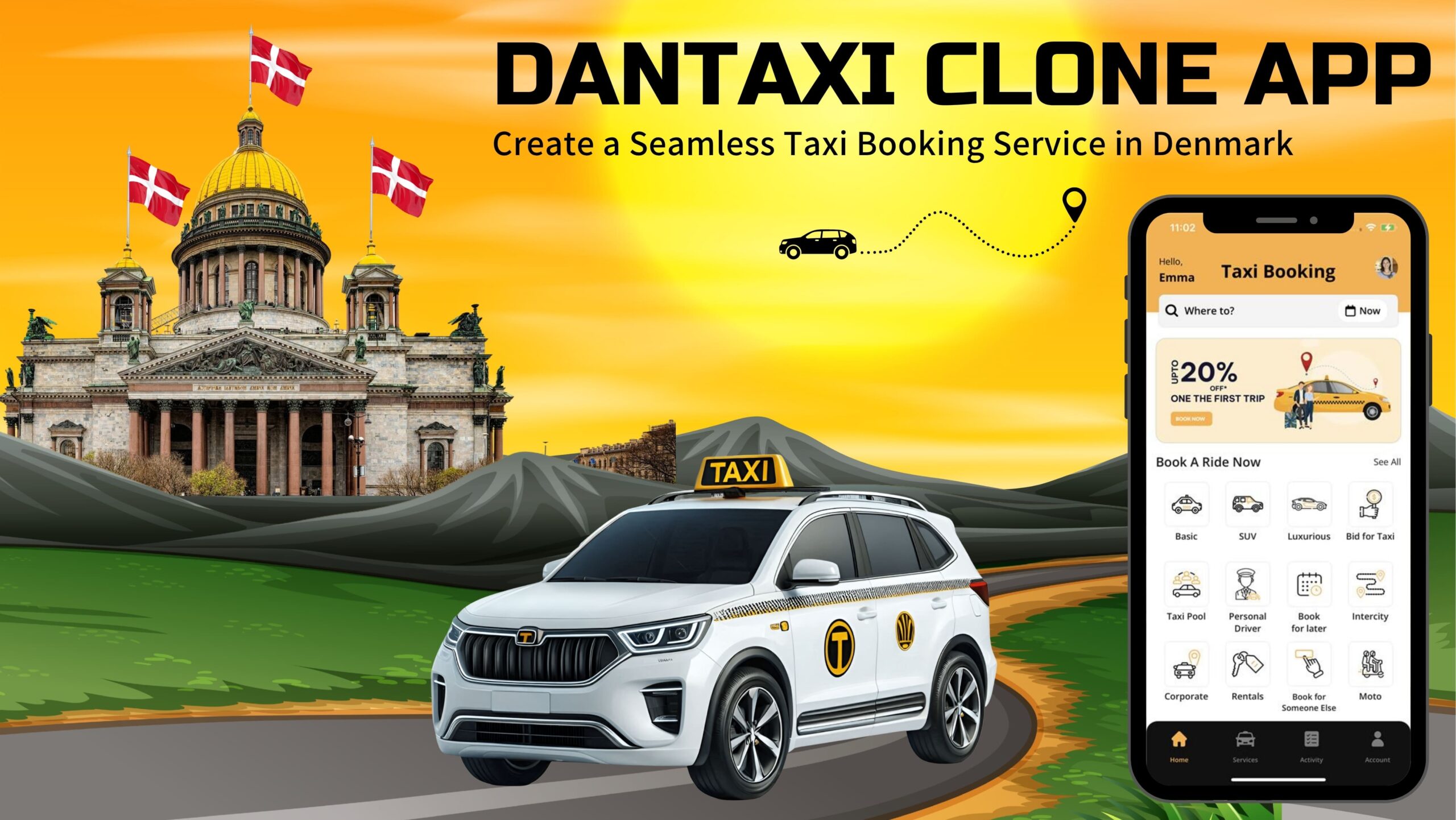
You can tell a lot about an app from the first five seconds you open it. That’s not an exaggeration. Those few moments decide whether a passenger trusts what they see, or quietly closes it and goes back to whatever app they used before. And when you’re building something like a Dantaxi Clone, a full fledged Taxi Booking App Denmark style platform, those seconds carry real business weight.
Because here’s the truth: design isn’t just about colors and buttons. It’s about how profit flows through your screens.
When most entrepreneurs think about starting a taxi business in Denmark, their first instinct is to talk about fleets, drivers, licenses, or maybe marketing spend. All fair. But few pause to think about design, the invisible structure that holds the entire customer experience together.
The way your app looks and behaves decides how long users stay. How fast they book. How confident they feel when entering payment details. In short, your app’s design literally determines how much money you make, quietly, consistently, behind the scenes.
Why Denmark Needs Apps That Feel Local, Not Imported
Let’s talk about the Danish market for a second. It’s not New York. It’s not Dubai. It’s a place that values clarity, reliability, and simplicity, design traits that you see everywhere from a Dantaxi ride to a Copenhagen café interior.
That’s why a Taxi Booking App Denmark needs to feel familiar, intuitive, minimal, easy on the eyes, but efficient to the core. No flashy animations, no unnecessary clutter.
A Dantaxi Clone, done right, captures that balance perfectly. It mirrors the flow that local commuters are already comfortable with, a clean map, a simple pickup drop interface, transparent pricing, clear driver information. And while it might look “simple,” that simplicity is what builds trust.
If you’ve ever used Dantaxi’s app, you know how unpretentious it feels. You open it, book, and get moving, no friction. That’s design doing its job.
The Design That Makes Money (Even When You’re Not Looking)
Let’s be blunt: an ugly or confusing app bleeds users. They uninstall it faster than you can send a coupon code.
But a well designed Dantaxi Clone does the opposite. It converts. Subtly. Quietly.
Here’s how:
- Reduced friction = faster bookings. Every second saved in the booking flow adds to your conversion rate.
- Trust through transparency. When fares, routes, and driver profiles are clearly shown, users don’t hesitate.
- Driver comfort. If the driver app is designed right, with big buttons and logical flows, they accept more rides. That means your availability improves, which in turn attracts more passengers.
- Clean interface = fewer support tickets. You don’t want users constantly asking “where’s my ride” because your app confused them.
So yes, design is profit. It’s the silent salesperson working every minute of the day.
The Clone Advantage: Why a Dantaxi Clone Already Gets It Right
Now, here’s where the concept of cloning makes a lot of sense, especially if you’re a start up or a local entrepreneur entering the ride hailing business.
A Dantaxi Clone isn’t about copying blindly. It’s about adopting what works.
The button placements, the user journey, the payment logic, all of it is tuned for efficiency. So when you buy or license such a clone, you’re inheriting the wisdom of thousands of rides.
That’s an incredible head start.
You don’t have to waste six months doing A/B tests to figure out where to place the “Confirm Ride” button or how to display estimated fares. That’s already built in. Your focus can shift to localizing, branding, maybe improving on top of a design flow that’s already proven to convert.
And that’s what people often miss about clones, they’re not cheap imitations, they’re shortcuts to market readiness.
Design is More Than UI, It’s Emotional Architecture
When people say “design,” they often think about user interface, icons, colors, typography.
But real design is deeper. It’s about how people feel when they interact with your product.
A Dantaxi passenger in Copenhagen doesn’t want surprises. They want reliability.
So your clone’s design should speak that language, soft, confident, predictable. The same experience every single time.
That sense of calm reliability builds brand loyalty faster than any promo code ever could.
If your passenger feels at ease from the moment they open your app, because everything just “makes sense”, they’ll come back. That’s emotional architecture.
The Power of Familiar Design Patterns
That’s the genius behind cloning apps like Dantaxi. When you model your Taxi Booking App Denmark after Dantaxi’s structure, users intuitively understand what to do. They know where the map is. They know how to confirm a ride. They trust what feels known.
And that’s the subtle benefit of a Dantaxi Clone, familiarity breeds comfort, and comfort drives conversions.
It’s the same reason why most e commerce checkout flows look similar, or why food delivery apps share the same basic steps.
Profit Hides in the Details
Let’s go microscopic for a moment.
That little “loading” spinner when a driver is being assigned? If it lags, users cancel.
That color contrast between map pins and background? If it’s too dull, people misclick.
That extra text field in the feedback screen? Fewer users bother leaving reviews.
Tiny things. But every one of them affects conversion, retention, or satisfaction metrics.
That’s why experienced design teams, the kind who’ve been building on demand apps for over a decade, obsess over such micro interactions. They understand that the app isn’t just code. It’s psychology translated into pixels.
And if your Dantaxi Clone comes from a team with that level of design maturity, you’ll feel it. The transitions will be smoother, the layouts more natural, the flow almost invisible in how well it works.
That invisibility, that feeling that you don’t have to think while using it, is the highest form of design achievement.
Designing for Drivers: The Forgotten Half
Let’s not forget that your Taxi Booking App Denmark isn’t only for passengers. The driver app is half the story, and in many ways, the half that keeps your business alive.
A beautifully designed driver interface can mean faster acceptances, fewer cancellations, and happier drivers overall. And happy drivers stay.
A good Dantaxi Clone ensures the driver dashboard is ergonomic, large, legible buttons, low glare night mode, clear notifications, and instant navigation launch. Drivers don’t have to fumble around or misread small text while driving. That translates directly into safety and efficiency.
Great design respects everyone in the ecosystem.
White Labeling and Branding: Making It Yours
Of course, even when you start from a Dantaxi Clone app shouldn’t feel like someone else’s.
That’s where branding steps in.
The clone gives you a skeleton, tried, tested, and polished, but your brand identity breathes life into it.
Your colors, your logo, your tone of language, the little animations between screens, these are what make your app feel distinct.
Some of the most successful taxi startups in Europe have done exactly this: take a solid white label clone, then invest heavily in branding and driver experience. The design stays functional, but the personality becomes yours.
That’s how you stand out while staying grounded in something that already works.
Dantaxi Clone as Quiet Design Mentors
Here’s an angle most people miss, cloned apps can actually teach you design.
When you study how a Dantaxi style system structures its booking screens, confirmation flows, or payment methods, you’re learning design logic in real time.
You see what works. What gets repeated. What never confuses users. It’s a living, breathing design reference guide, one that also happens to be a working business.
Good Design = Good Data
Something people rarely talk about is how design affects the kind of data you collect.
If your screens are clean, uncluttered, and logical, users complete more actions. They give you more information. They book more often. They rate drivers more consistently.
That means better analytics, clearer trends, smarter marketing.
On the flip side, a messy app produces incomplete data. People abandon flows midway, skip feedback, or misclick. You lose insights, and eventually, revenue.
Design, in that sense, isn’t decoration. It’s the first layer of your data strategy.
When Simplicity Wins
One of the hardest lessons in app design is restraint.
Entrepreneurs often want to add more: extra filters, extra maps, extra features.
But every addition introduces friction.
A well crafted Taxi Booking App Denmark doesn’t try to do everything. It does one thing flawlessly: move people from point A to B with minimal effort.
Your Dantaxi inspired clone should embody that spirit. The simplicity that looks effortless but takes years of iteration to achieve.
And when you hit that sweet spot, clean, reliable, instantly understandable, you’ve got something people will stick with.
Conclusion: The Shape of Trust
At the end of the day, great design is invisible. It doesn’t shout. It whispers, “You’re safe here. You can trust this. It’ll just work.”
That’s the magic a Dantaxi Clone brings when it’s built right. It reflects years of user trust, refined into a simple, reliable interface. It borrows what Denmark already loves about local taxi apps, clarity, predictability, calmness, and gives entrepreneurs a solid foundation to build their own brand upon.
And when your app looks and feels that trustworthy, profits follow.
Because in this business, design isn’t an expense. It’s your first and most powerful marketing tool. It’s the reason people stay. The reason they recommend. The reason your brand becomes more than just another taxi service.
So if you’re planning to step into Denmark’s growing ride hailing space, don’t just think about features and fleets. Think about design, the quiet language that speaks louder than any ad campaign ever could.
That’s where the success of your Taxi Booking App Denmark truly begins.

Uber App Clone introduces the great taxi on demand business solution by launching a Uber App Clone providing white-labeled uber clone apps available in different languages and currencies.