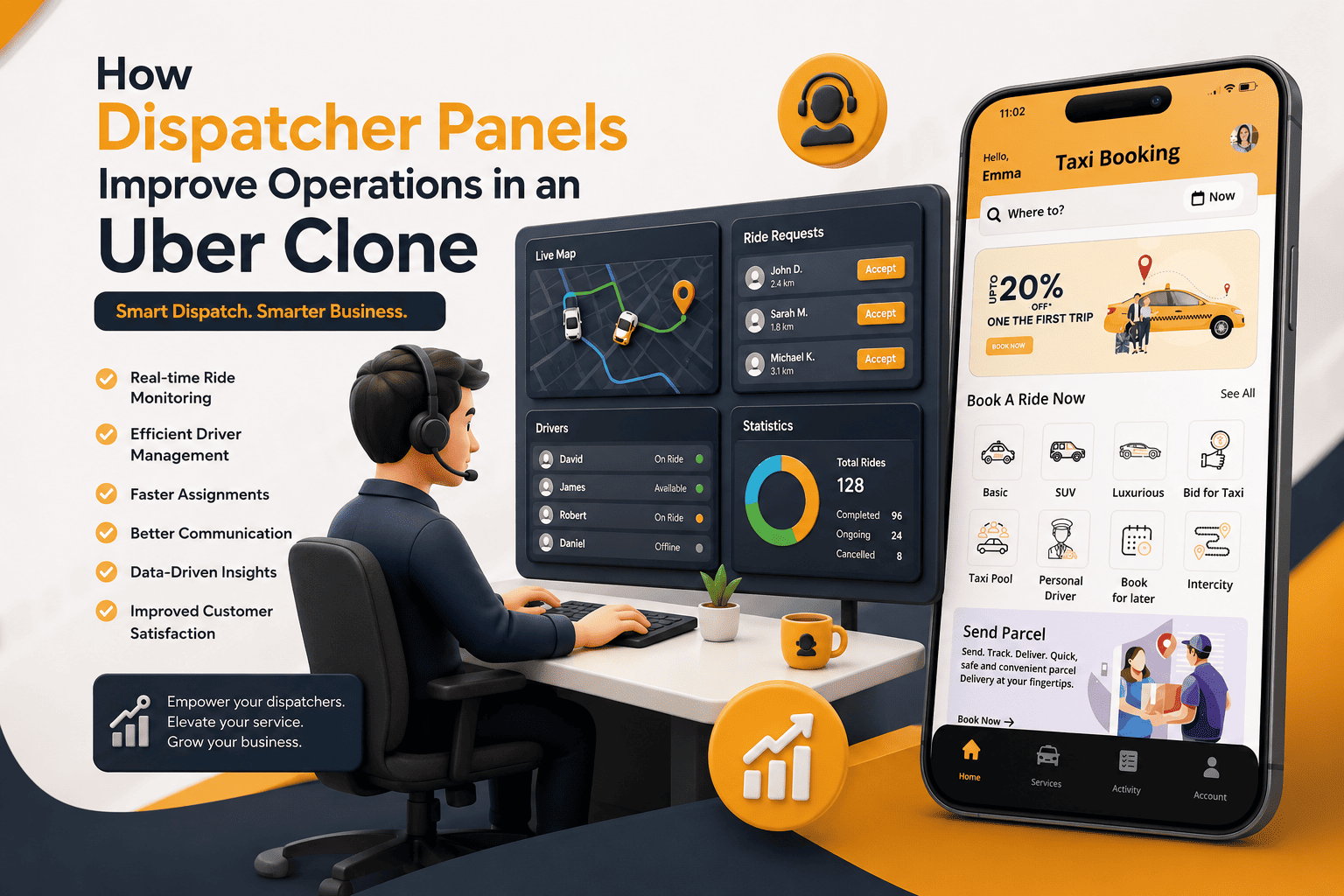
When a person thinks about developing a taxi app to start their own business of the same model, their thought process and conversation with the white-label firm almost always shift to the apps, be it the rider or the driver app, and maybe the payment gateways to understand it better.
Nobody thinks about the dispatcher panel, and why would they?
It is a simple panel but with advanced features that work right along the admin panel. But this is a very costly oversight.
To get ahead of this competitive market, anyone thinking about starting their own taxi app business should look at places where no one cares about it in the first place.
Since the global market is about to reach $181.5 billion by 2033, tools such as dispatcher panels become increasingly important for maintaining service quality for the rider.
As more rides move through these platforms, operational tools such as dispatcher panels become increasingly important for maintaining service quality at scale.
For any app owner running a taxi booking platform, the dispatcher panel shifts the power over to the admin and the taxi fleet companies to book rides on behalf of users.
What Is a Dispatcher Panel?
Simply put, a dispatcher panel is basically a web-based dashboard that gives your staff the power to see and control every single active ride, available driver, and pending booking on your platform in real time.
While the app’s algorithm handles the everyday routine of matching riders with nearby drivers, the dispatcher panel is there to step in when that routine inevitably goes off script.
When you buy a good Uber clone app, the automation takes care of almost all the heavy lifting. A user books a trip, the system finds the closest driver, estimates the arrival time, and assigns the ride with complete self-scheduled automation.
Think about it: what happens when a driver suddenly cancels halfway through a trip, or there’s a massive rush of riders in one specific area, or an old-school corporate client calls the admin directly to book a special ride? Or maybe the GPS just drops and the ride is stuck in limbo. That is where the dispatcher panel gets into the process and provides a reliable solution efficiently.
The automatic system is great for handling normal, routine decisions efficiently. But any smart app owner knows that looking for an Uber clone script with a built-in dispatcher panel is the only way to handle the messy reality of the business, because you simply cannot rely entirely on an app’s automation and hope for the best.
Core Functions of a Dispatcher Panel
1. Managing Rides and Drivers as They Happen
When someone opens a dispatcher panel, the main thing they see is the live map. It shows all the drivers moving around and the rides waiting to be assigned. Instead of just guessing where the cars are, the person running the business can actually see what is going on.
If a concert finishes or a flight is delayed and a bunch of people suddenly need rides, the dispatcher can just tell drivers in quiet areas to move over there. The app’s code tries to do this, but having a real person jump in makes sure drivers get there much faster. And for anyone buying a white-label Uber clone to cater to corporate clients or airport trips, you really can’t ignore this. Corporate clients pay good money and they want to know an actual person is watching their booking, not just an algorithm.
2. Handling Problems and Keeping Things Running Smoothly
Because things don’t always go right in a taxi business. Drivers randomly go offline. Riders argue about the fare. Sometimes the GPS glitches out and a driver is stuck driving in circles for twenty minutes, or an elderly person who doesn’t know how to use the app just calls your business directly to book a ride.
Whenever this happens, somebody needs to fix it right away. The panel gives the staff the power to manually reassign a ride, cancel it, or change the fare, without having to mess around in the main admin panel.
And keeping the admin panel and the dispatcher panel separate is actually a really smart thing to do. The admin panel is where an app owner sets up the prices, approves the drivers, and looks at the finances. If a developer tried to mix them together into one screen, it would just be confusing and slow everything down.
3. Assigning the Right Driver to the Right Ride
This panel also comes in handy when the app tries to find a driver and fails. This happens a lot when a person is just starting their taxi app business and doesn’t have a massive fleet of drivers on the road yet. If the system times out, the dispatcher gets an alert, looks at the map to see who is actually free, and just assigns the ride manually. The driver gets the ping on their phone like normal, but a real person made the decision.
Plus, if a taxi fleet company is running a corporate shuttle service on the side, sometimes they have to assign a specific driver to a specific client because of the car type or just because the client asked for them. A native automated app is not developed to follow this process. But, the dispatcher panel shifts the control back to the staff so they can handle it themselves.
How Dispatcher Panels Improve Customer Experience
At the end of the day, running a good taxi business comes down to two simple things: getting a car to a rider fast, and making sure the trip actually finishes without a headache.
If you get this right, people keep using your app. And making money by keeping riders happy is the whole reason a person spends money on taxi app development in the first place.
If something goes wrong behind the scenes but your staff fixes it fast, the rider doesn’t even notice. The person waiting for a cab doesn’t care that their first driver canceled and a dispatcher had to manually assign a new one in under a minute. They just want their car to show up. In fact studies show that 90% of customers consider an immediate response important, while 60% expect a response within 10 minutes or less.
In this kind of high-pressure business, major decisions often fall on operational teams, making dispatcher panels especially valuable when something goes wrong.
For anyone starting a ride-sharing app in a crowded market, fixing things quietly in the background like this is how you actually get ahead. You might be competing against another app with the exact same prices and the same number of drivers on the road. But the app owner whose team can step in and clear up a mess faster is the one people are going to trust and keep using.
Choosing an Uber Clone With a Strong Dispatcher Panel
So, when someone is sitting down to test out a white-label Uber clone demo, they really need to pay close attention to the dispatcher panel.
Don’t just glance at it. See if the live map actually works smoothly when there are a bunch of rides happening at the same time. Try manually assigning a driver to a trip and see if it is a quick click, or do you have to jump through five different pop-up screens just to get it done? Also, make sure that when a ride times out or something goes wrong, the alert actually pops up right in front of you instead of getting buried under a bunch of useless dashboard stats.
This is exactly why it pays to buy from a white-label firm that actually knows what they are doing. Most professionals who have made a clone script already include a solid panel because they’ve worked with enough taxi fleet companies to see what actually goes wrong on the streets.
Getting an app that was built based on this kind of real-world feedback is just a smart move. It basically saves a new app owner from having to figure out all these messy daily problems themselves and losing a ton of money in the process.
Final Thoughts
In this imperfect world, we cannot rely on everything automated where algorithms handle marketplace complexity. App owners have aspiring ideas, and they want to enter the taxi app development through a white-label Uber clone for rapid business scaling, so by gaining access to such advanced features very early, they can use it to let the algorithm work and send in a dispatcher, separating a regular transport business into the one that makes the most out of any situation.
FAQs
1. Can a small taxi startup benefit from a dispatcher panel with only a few drivers?
Yes. Exceptions happen even with a small fleet, such as handling cancelled rides, reassigning drivers in the middle of the trip, and even assisting passengers without the full admin backend support.
2. Does having a dispatcher panel need dedicated full-time dispatch staff?
No. The panel supports a flexible staffing model, which means that the owner can use the panel on a part-time or on-call basis depending on the situation. They can only activate human oversight during peak hours or high-demand events.
3. How does a dispatcher panel affect the rider experience?
The end user or the rider rarely sees the dispatcher panel directly. Since the demand for this kind of panel is high, it can easily offer faster exception resolution, fewer stranded rides, and more consistent service. When problems are handled quickly in the background, the experience gets better without the rider ever knowing what happened or who was involved in the first place.

Uber App Clone introduces the great taxi on demand business solution by launching a Uber App Clone providing white-labeled uber clone apps available in different languages and currencies.