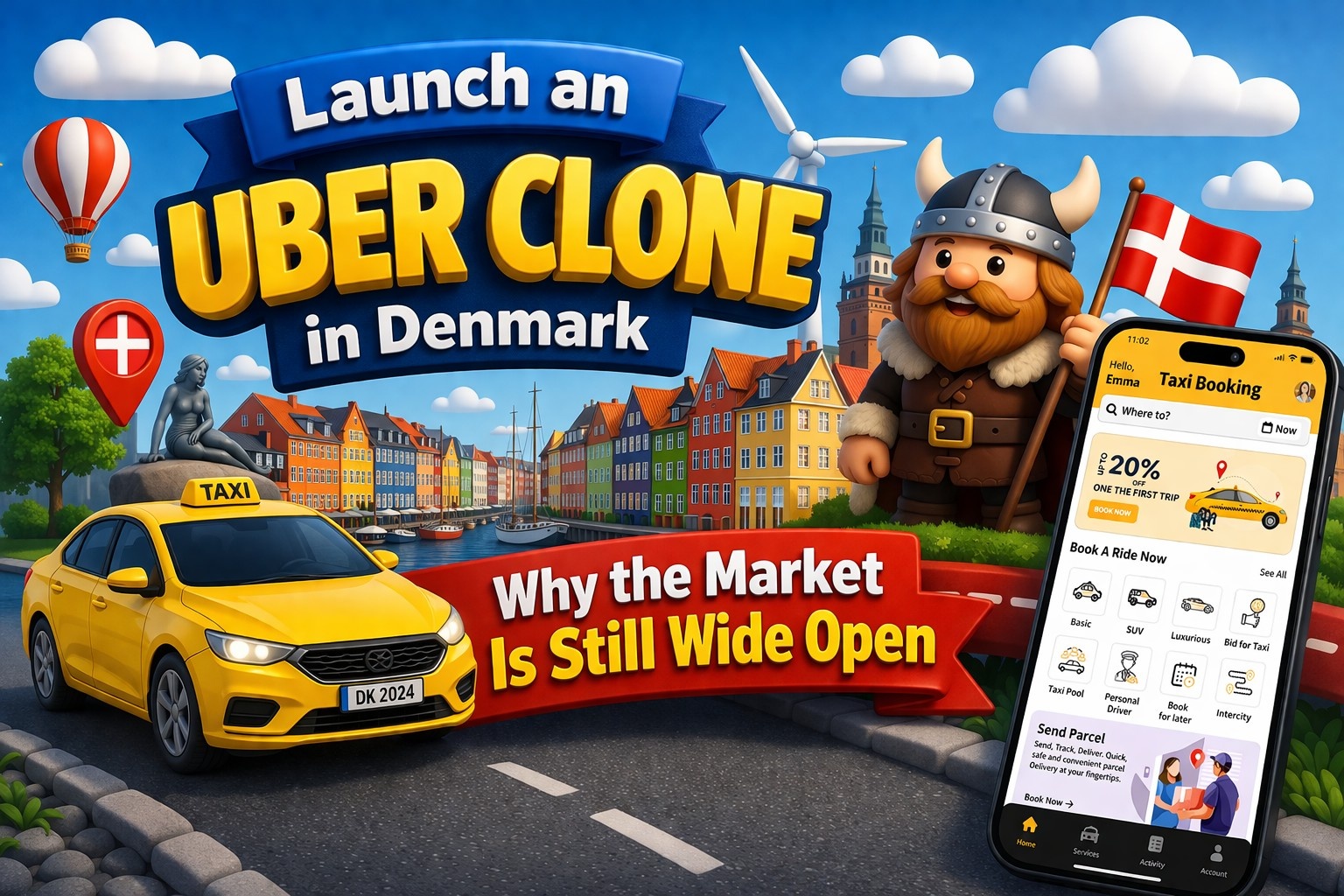
A Uber clone in Denmark will not be a copycat concept. It’s a viable business model that can be used by a market that is still looking for speedy easy, secure, and safe reservation of rides. Uber was forced to leave Denmark in 2017 following the country tightened its taxi rules that left a huge demand gap. To USA founders, this gap could be a lucrative opportunity but only if the app is designed with security and compliance right from the beginning.
Why Denmark Is Still a Strong Ride-Hailing Market
Denmark is a booming market because people require easy transport, especially in urban areas to travel to airports as well as business travel and everyday travel. The country is home to millions of households as well as thousands of night stays made by Danish as well as foreign tourists every year, which shows constant movement and repeat travel need. This is precisely the kind of place in which a ride-hailing service that is regulated can grow well.
To USA business owners, this is crucial because Denmark isn’t an “big however dirty” market. It’s a well-organized market. This means trust as well as speed and compliance are more important than sensationalism. If the Uber clone in Denmark can help people feel secure and save them time, then the product is likely to gain acceptance.
Why Uber Was Banned in Denmark
Uber quit Denmark due to the fact that Denmark changed its taxi law and introduced stricter rules for drivers, which included the requirement for fare meters as well as seat sensors. Reuters stated Local taxi unions, firms and politicians believed Uber was a monopoly because it was not able to comply with the same standards of law as established taxi companies. Uber later announced it was shutting down it’s Danish operation in April of 2017.
The more important lesson is straightforward. Denmark did not oppose ride-hailing as a notion. It was able to reject a model that didn’t fully conform to the guidelines. This distinction is important, as the modern Uber clone in Denmark is still a viable option when it’s built to respect local transportation laws instead of attempting to beat them.
The Huge Market Uber Did Not Capture
Uber was not able to take advantage of the entire Denmark market due to the fact that demand did not disappear but the legal pathway did. When Uber was gone, the riders required transportation but the layer of services that could have taken care of the demand was either not there or was not available. This created an industry with genuine mobility requirements and an obvious need for a sustainable alternative.
Many founders are wrong. They believe the potential is that they are “cheaper then Uber.” That’s foolish thinking. The real benefit is being reliable, legal and simple to trust. Denmark has a large population and a steady movement of people as well as a mature user base. The combination isn’t small. It’s a clean organized market where the safety-first app for ride-hailing will be more successful than an uninformed one.
For a U.S.-based ICP it should be logical. In markets with regulated markets it is usually not the most loud app. It’s the one that eases the load for drivers, riders as well as regulators at same simultaneously. This is how you take advantage of an opportunity that Uber that is left open, without reviving the same issues that drove Uber out initially.
How to Launch a Safety First Uber Clone in Denmark
The launch of the Uber clone in Denmark is a requirement for an approach that is compliance-first, that ensures safety and compliance are integrated into the product right from the beginning. This involves ensuring that the product is in line with Danish transportation laws, as well as making sure that the driver is properly verified and establishing the system to operate in compliance with legal frameworks instead of in opposition to them. If compliance is considered an essential feature the market entry process becomes more smooth and more sustainable.
A safe platform must include verified driver onboarding and transparent fare systems, real-time trip tracking and an in-app service that is accessible. The riders need to know whom they are driving, how much they’re paying for, and how their trip is being tracked. These factors make it easier to trust and reduce confusion which directly affects user retention.
From a practical perspective from a practical perspective, the platform needs to be able to balance control and usability. Driver applications should be easy and effective, while administrative systems must permit documents validation, checks for compliance and monitoring of trips. Payment systems should be secure and simple to use particularly for a consumer which demands seamless digital experiences.
For founders targeting Denmark, positioning matters. A mobile solution that is compliant is more likely to achieve acceptance than a disruptive solution that challenges the existing system. A structured Uber clone in Denmark can be on the market sooner by decreasing the friction with regulators, establishing trust with the users and providing a service that feels contemporary and trustworthy.
Regulatory Compliance That Wins Trust
Compliance with regulations is what transforms an app for ride-hailing from a risky venture to a legitimate enterprise in Denmark. The launch must be based around local chauffeur licenses medical evidence as well as criminal records checks when necessary, and the proper qualifications for commercial passenger transportation. These are not merely optional information. They are essential to market entry.
Compliance is also a factor in establishing brand trust. Drivers are more likely to book if the platform is legitimized. The drivers are much more inclined join when the company has a clear operating plan. They are also more likely to back you in the event that you don’t appear like you’re seeking to skirt the law to gain short-term advantage.
A viable Uber clone in Denmark should include legal workflows in the app itself. Driver onboarding should request the appropriate documents. Administrator panels should allow the company check the approvals. The trip records must be clear. Receipts must be clearly written. Data handling must follow the strict privacy standards. This is the way an app for ride-hailing becomes flexible instead of fragile.
It is also where the speed originates. As strange as we humans are the fastest method to be able to move swiftly in a market that is regulated is to stop thinking that rules aren’t a problem. Rules are the road map. Follow them and you’ll start with much less resistance.
Conclusion
Denmark remains open for the best ride-hailing service, but only for a company that is a part of the legal system and has designs that are safe from the beginning. Uber quit because its old model didn’t conform to Danish taxi laws. It doesn’t mean the market vanished. It simply means that there is a need for a more robust compatible, compliant alternative.
If you’re looking for USA CEOs and founders of the company, the chance is evident. Create an Uber clone in Denmark that is regulatory-ready, safe and easy to rely on. The market isn’t looking for a new chaos app. It’s waiting for a reputable one which can help drivers, riders and remain in the right line of law.
Launch an Uber clone in Denmark with security, compliance and speed at the heart. If you are looking to capture market share without a panic over regulations, design a ride-hailing service that is safety first that is fully prepared to go into Denmark immediately.
Frequently Asked Questions
1. What was the reason behind Uber outlawed in Denmark?
Uber has left Denmark following tightening taxi rules, which include obligatory fare meters and seat sensors. The firm said it would not remain in the country under the new rules.
2. Are Denmark still a great location for an Uber clone?
Yes. Denmark remains a major transport demand, with millions of households and millions of annual overnight stays, which helps to ensure the continuous use of mobility.
3. What is it that makes An Uber clone legal in Denmark?
A legal setup should adhere to Danish commercial passenger transport regulations which include chauffeur license, medical certificate as well as criminal background checks where relevant age, driving experience and professional qualifications.
4. What should a ride-hailing app that is safety-first? app contain?
It must include verified drivers and transparent prices, trip tracking, access to support, and solid identity verification to ensure that users feel secure and the platform is deemed legitimate.

Uber App Clone introduces the great taxi on demand business solution by launching a Uber App Clone providing white-labeled uber clone apps available in different languages and currencies.