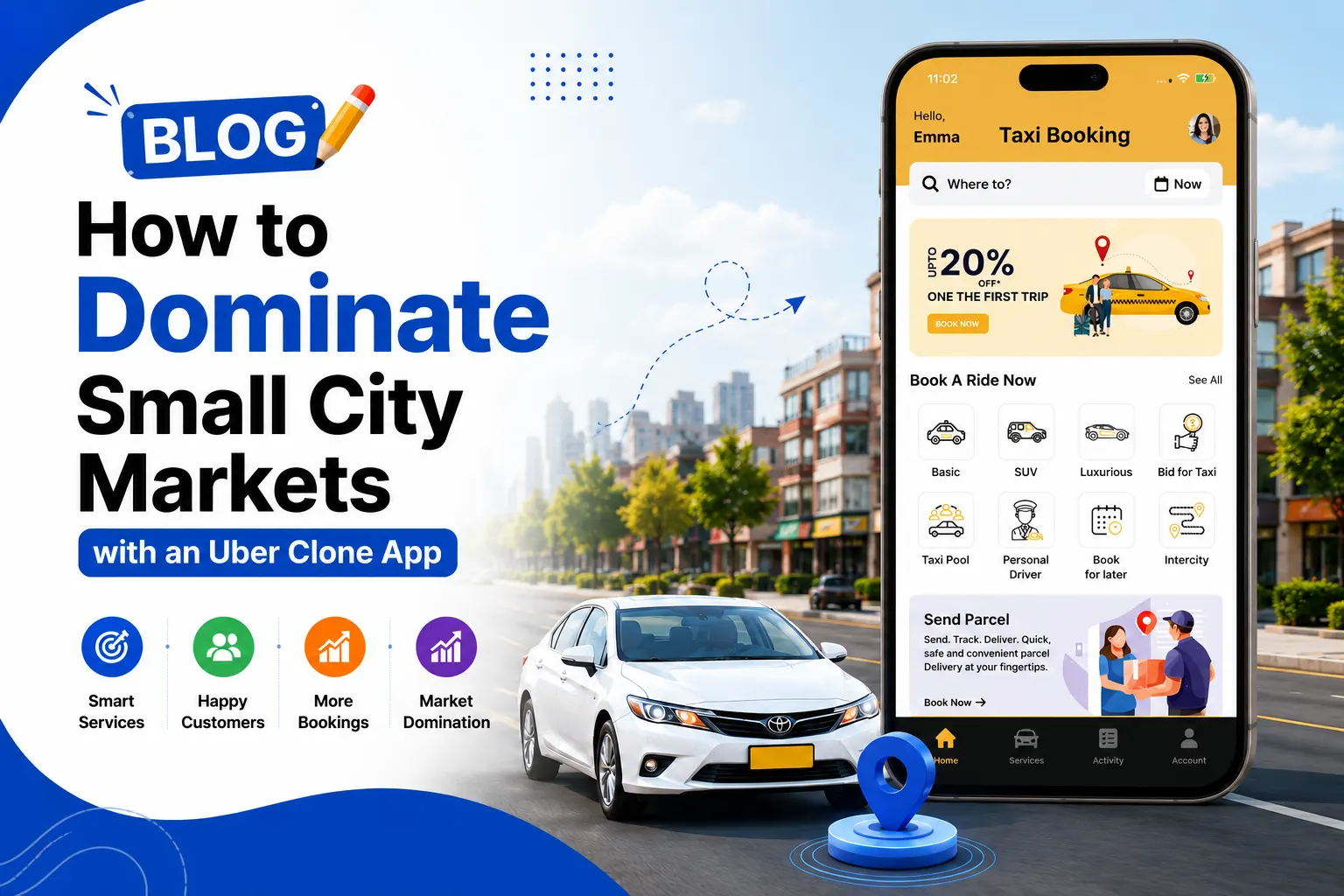
Many well-prepared entrepreneurs who start an Uber clone in a small city try to use big-city plans, thinking the same strategy will be applied there. This simple misunderstanding is exactly why most of these new ride-booking businesses are not able to live up to their complete potential.
Using a ready-made app script makes the tech side very easy today. As it handles all the app design, development and support part allowing the owner to focus more on the marketing and support in a tier-2 or tier-3 city.
In fact, app development plays a significant role in dominating the market. A GSMA report projects the adoption of smartphones to cross 87% by 2025 in Sub-Saharan Africa. The majority of the new users come from non-metro areas. These non-metro areas are not markers waiting to be discovered, but active populations that organized ride-hailing platforms have simply not connected well or in line with their requests.
Why Launching an Uber Clone App in Smaller Cities Demands a Different Playbook
If you launch too early in a small town without enough drivers on the road, it will leave a terrible first impression. When a rider opens your app and sees a completely empty map, they will probably never use it again. So a single failed booking actually hurts your brand much more than whatever your competitors are doing.
Before you spend your critical time trying to get new riders, it is very important to get your drivers ready first. Most ready-made scripts come with an admin panel. It allows the owner to get access to driver onboarding tools such as document submission flows, driver availability management, earnings and report dashboard and much more.
The platform is literally built to help you gather your local drivers long before your official launch day. Most founders simply don’t know about this and rarely use it that way.
A standard Uber clone script comes with local features built right in. It offers extra languages at no extra cost, local currency options, SMS setups, and direct UPI payments. It even supports right-to-left languages like Arabic and gets completely branded for your business in just a few days.
Because having these simple things is exactly what makes your app feel like it belongs in your city instead of feeling like a foreign copy.
What Actually Determines Market Dominance
Getting a strong hold on a new market rarely happens in a straight line. There are always competitors both local and global trying to get a hold of their target audience. All the data analytics, trends, graphs and deep market penetration provides the direction, where the final decision is always taken by ticking off multiple pros and cons. Some of them are mentioned below:
1. Choosing the Right Uber Clone Script Provider
A good Uber clone app provider will offer a full year of free bug support, free upgrades, and handle your app store submissions completely. They will also give you the open-source code so your own local developers can make changes later. For a founder in a small town without a huge tech team, having this kind of daily support matters much more than any fancy app feature.
Moreover, post-launch vendor support is the central pillar in the few initial months for a founder running a regional mobility startup in a smaller city. It settles the debate of whether the business becomes stable in the 3rd or 4th month or slowly loses ground to their competitors.
2. Mapping Driver Supply Before Marketing to Riders
Apart from this, these platforms come with driver apps that handle document verification and show drivers their daily earnings clearly. Some scripts even have a manual dispatcher panel that lets you take ride bookings over a normal phone call.
This is actually a massive advantage because many people in small cities still prefer calling for a ride instead of downloading a new app. So taking offline bookings early on helps you capture a huge customer base that purely app-based companies miss entirely.
3. Pricing for Local Purchasing Power, Not Metro Benchmarks
When it comes to pricing, most founders make the mistake of using big-city rates. But people in smaller towns always compare your prices to a shared auto-rickshaw instead of a luxury taxi. The admin panel actually lets you set different prices for different cities and draw strict boundaries around your service area. Because keeping your service area small in the beginning helps you maintain a high number of drivers without spreading them too thin.
4. Building Trust Through Hyperlocal Visibility
You should also turn on the intercity and shared taxi features as early as possible. Because catering different kinds of target audience surges the customer retention and impacts more word of mouth. Among ride-hailing, intercity demands the most loyal base of drivers and once it starts to have its own fair share of 5-star rides, your hyperlocal strategy becomes something completely new.
5. Activating Local Support, Not a Remote Call Center
Apart from this, relying on a remote call center usually frustrates your local riders. The majority of the tier 2 and 3 cities today need a physical presence. In order to combat this challenge, an in-app chat feature allows the local riders to directly have a conversation with the rider. They can even have a word about their trip history, document verification support, and earnings without hassle.
What This Market Is Actually Selecting For
The technology stack, whether it’s custom or owned, underneath your ride-hailing business is your answer to a market that questions the modern-day taxi booking software.
It might not be the finish line but many taxi app launch strategies revolve around it. Local transportation platforms which are not made from scratch rather have all the proven UI/UX and business model dominates the tier 2 cities. Globally, the ride-hailing business is expected to cross $432 billion by 2028.
The majority of this growth comes from regional markets where local operators are using ready-made taxi apps to launch their business instead of going the other way around.
What the technology gives you is a stable, proven base from which operational decisions actually create differentiation. A founder who understands driver incentive structures, local fare psychology, and community trust-building will outperform a technically superior competitor who ignores these entirely.
Final Thoughts
For founders who take driver onboarding seriously, along with local purchasing power, activating the right booking channels can offer faster profitability, stronger word-of-mouth loops, and far less brutal customer acquisition costs than mega cities of rapidly emerging metro markets. The Uber clone script gets you into the game way earlier than your competitors. Supply discipline and balance, local trust in riders, and operational patience often determine who stays.

Uber App Clone introduces the great taxi on demand business solution by launching a Uber App Clone providing white-labeled uber clone apps available in different languages and currencies.