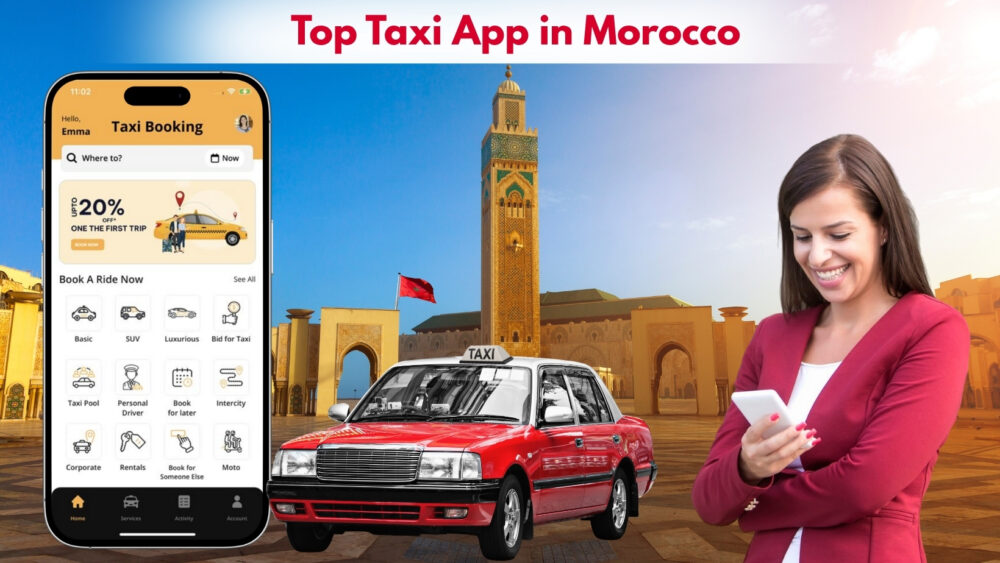
From Medina Streets to Mobile Screens: Taxi apps in Morocco Takeover
Once upon a time, catching a taxi apps in Morocco meant waving your arms on busy streets, bargaining mid-traffic, and hoping your ride didn’t vanish in a puff of exhaust. Today, that scene has evolved dramatically. From Casablanca’s bustling avenues to Marrakech’s winding medina roads, smartphones have become the new taxi stands. Apps like Careem, Yassir, Roby, and Uber are not just adding convenience, they’re reshaping how Moroccans move, offering a level of convenience and reliability that was previously unheard of.
This shift isn’t merely a technological trend. It’s a mobility revolution, and for entrepreneurs with ambition, Morocco is fast emerging as one of Africa’s most lucrative Uber-clone frontiers, offering a wealth of opportunities for growth and success.
Morocco’s Ride-Hailing Market at a Glance
The ride-hailing sector in Morocco is on a steep growth curve. By 2025, the market is forecasted to cross US$75.29 million, and by 2030, over 5 million users are expected to rely on app-based transport. This surge is driven by a mix of forces that are impossible to ignore:
- Urban congestion is pushing cities toward organized mobility solutions.
- Smartphone adoption is accelerating among young professionals.
- Tourists expect quick, safe, and familiar app-based rides.
- Lifestyle shifts are steering people away from traditional taxis toward digital platforms that offer transparency and reliability.
Morocco’s young, tech-savvy population is leading this behavioral shift. The habit of hailing taxis on the street is slowly being replaced by tapping icons on screens.
The Taxi Apps in Morocco Dominating
Morocco’s ride-hailing revolution didn’t happen overnight. A handful of key apps have played an outsized role in reshaping the market, each carving its own niche.
Careem, headquartered in Dubai, made an early splash by introducing features that Moroccan riders quickly embraced: real-time tracking, transparent fares, and smooth cashless payments. In cities like Casablanca, Rabat, and Marrakech, it became a preferred choice for both daily commuters and tourists seeking predictability.
Then came Heetch, a French-born platform that focused squarely on Morocco’s nightlife and urban millennial crowd. Its late-night friendly rides and approachable brand voice made it a hit among young riders in Casablanca, Fes, and Tangier who wanted affordable and reliable trips after hours.
Yassir, originating from Algeria, brought the idea of a super app to Morocco. It went beyond simple ride-hailing, adding groceries, payments, and other daily services. In Rabat and Casablanca, Yassir’s multi-service model resonated with users looking for one app to handle multiple urban needs.
No global player’s arrival was as symbolic as Uber’s. Known for its fare estimates, rigorous driver screening, and global trust factor, Uber gained traction in Casablanca, especially among international travelers and locals who valued its familiar user experience.
Meanwhile, Yango, a Russian app, introduced a layer of technological sophistication with its AI-based routing and ultra-precise fare calculations. In cities like Casablanca and Rabat, Yango’s efficient routing appealed to riders who cared about speed and price accuracy.
Lastly, inDrive added a completely different flavor to Morocco’s ride-hailing market. Its rider-negotiated fare model empowered users to set prices and choose drivers based on preference, a feature that blended digital innovation with Morocco’s traditional negotiation culture.
Together, these apps have localized cleverly through multilingual interfaces, integration with licensed taxis, and features that fit seamlessly into Moroccan urban life.
Challenges and the Regulatory Backdrop
In October 2025, Morocco took decisive action against unlicensed ride-hailing operators. Several unregistered platforms faced restrictions, and some were forced to cease operations. This regulatory shift was a turning point.
Roby, with its exclusive partnerships with licensed taxis, emerged as a model of compliance in the face of the regulatory shift in October 2025. This underscores the importance of regulatory readiness in the ride-hailing market, providing a clear direction for new entrants.
For new entrants, this isn’t a roadblock. It’s a signal. Entrepreneurs who build regulatory-ready Uber-Clone platforms and forge local partnerships can step into the space confidently, while competitors tied up in legal knots lose market ground.
Why taxi apps in Morocco Is Ideal for Investment
- Morocco’s conditions for Uber-clone ventures are golden:
- Rapid urbanization is creating demand for structured transportation solutions.
- High smartphone penetration among young professionals fuels adoption.
- Tourism is expanding, bringing millions of riders who expect modern mobility.
- Government support for tech entrepreneurship is rising.
This combination sets the stage for entrepreneurs to deploy ready-made solutions from a Reputed White-label Firm that already includes the building blocks of success:
- Real-time ride tracking
- SOS emergency button
- Multi-language and multi-currency support
- Driver wallet and admin earnings reports
- Cashless and digital payment integration
- Corporate rides and airport transfer modules
By starting with a strong base provided by a Clone App Development Company, entrepreneurs can focus their energy on localization and growth, not reinventing the wheel.
Building Your Own Morocco-Ready Taxi App
Launching taxi apps in Morocco isn’t about cloning Uber blindly. It’s about adapting intelligently. Savvy entrepreneurs are localizing their Uber-Clone platforms in the following ways:
Arabic and French language support to cater to Morocco’s multilingual population.
Regulatory compliance tools that verify local taxi licenses within the app.
Wallet bonuses, promo codes, and referral earnings to drive user acquisition.
In-app tipping and local incentives to align with Moroccan social habits.
Geofencing and dynamic pricing to manage demand in crowded urban centers.
A Mobile App Development Company can roll out a fully localized Uber-Clone in as little as 1–2 weeks, giving entrepreneurs a first-mover advantage without spending months on development.
The Future of Ride-Hailing in Morocco
Fast forward to 2030, and Morocco’s streets are buzzing with AI-powered navigation, cashless transactions have become the norm, and super apps like Yassir dominate urban mobility by blending services under one digital roof.
Future-ready entrepreneurs will not just offer rides. They’ll build mobility ecosystems that adapt continuously, integrate offline driver support, and cultivate community trust. By launching now with a flexible, upgradable Uber-Clone, they can evolve with the market rather than chase it.
Conclusion
Morocco’s taxi app revolution isn’t a distant opportunity. It’s happening in real time. With a projected US$75 million market and millions of users expected in the coming years, the entrepreneurs who act decisively today will own the roads tomorrow.
A Reputed White-label Firm provides the fastest, most efficient route to launch. With a regulatory-ready, feature-rich Uber-Clone, entrepreneurs can tap into Morocco’s booming urban mobility scene without the delays of building from scratch.
It’s stepping into Africa’s digital transportation future with the right technology, at the right moment, in the right place.

Uber App Clone introduces the great taxi on demand business solution by launching a Uber App Clone providing white-labeled uber clone apps available in different languages and currencies.