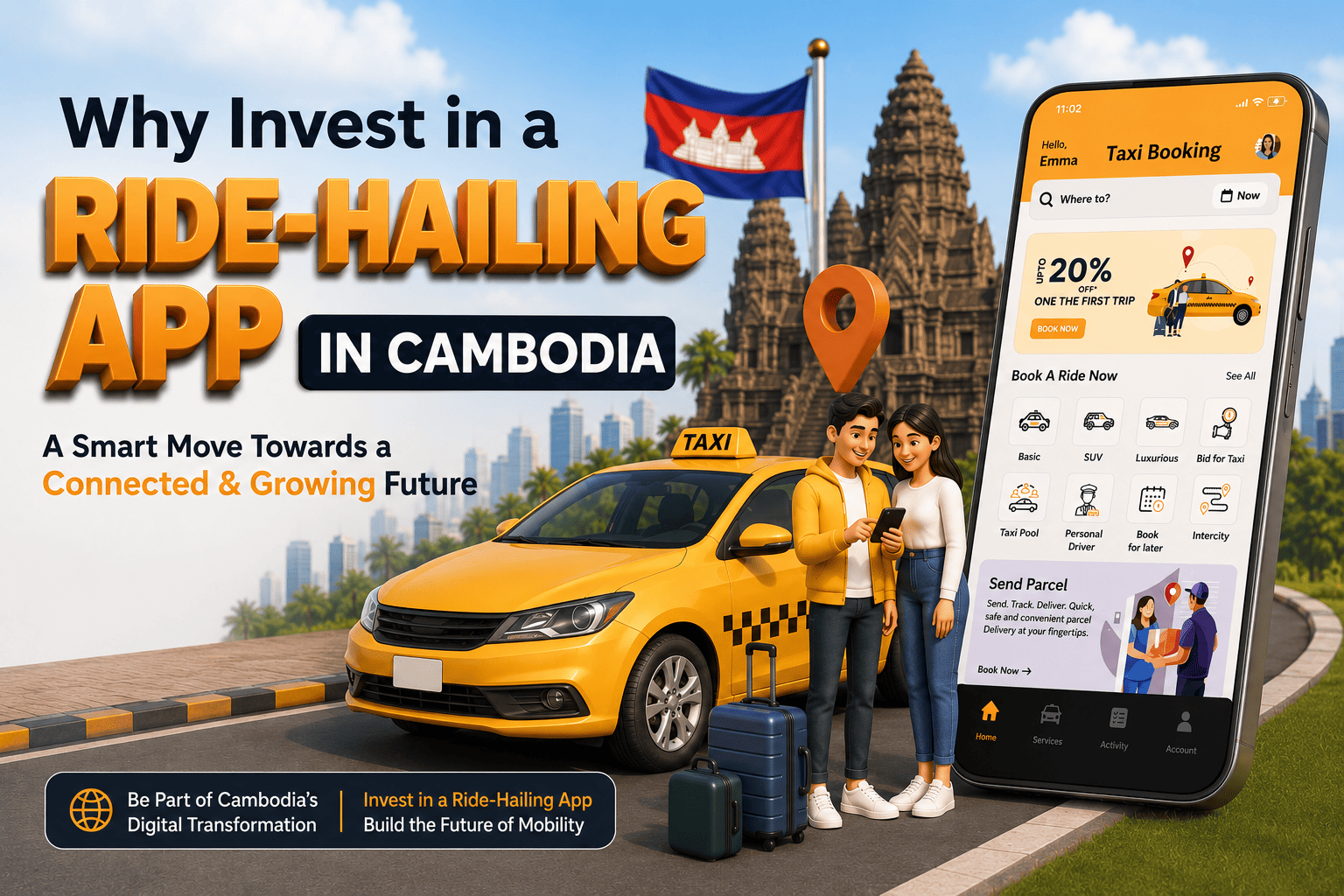
Cambodia’s Tourism Boom is A Digital Mobility Moment
The scene is set for a rise in the number of tourists entering Cambodia. The fact that, according to TripAdvisor ranking, Siem Reap is the 5th best cultural destination in Asia for 2026 might have something to do with this.
However, the rise in tourism can be mainly credited to the following factors:
- The reopening of the Northern Library at Angkor Wat has been termed a major event that is expected to draw large crowds from across the globe since it is the first time in nearly a decade.
- Cambodia and China have a special program this year (2026) – “People-to-People Exchange Year”, which will also give a boost to the tourism industry.
The ancient kingdom of Angkor Wat is one of the most historically significant places in Southeast Asia. This place draws millions of people worldwide every year and is likely to draw twice as many this year.
The irony of this is not lost here! The tourists visiting Cambodia will expect a state-of-the-art transportation system that includes AI and other value-added features. They expect high-standard systems of 2026 while visiting a temple and an ancient site that is over 900 years old.
The local transport in Cambodia isn’t the greatest and often poses a challenge to tourists. To help you gain a better understanding, there were over 6.7 million international arrivals in 2024, and this will rise in 2026.
Angkor Wat survived centuries of conquest. It shouldn’t have to survive a tourist who can’t get a reliable ride home. This article provides more details on developing an AI-powered,feature-rich Uber Clone for Cambodia.
How Tourists Are Driving Ride-Hailing Demand
Cambodia is a country where the Tuk-Tuk is the most popular taxi, English is not the first language, and fares are negotiated at the roadside. Booking a taxi might not be as straightforward as one might think, especially if you are a tourist.
It is safe to say that the tourists visiting Cambodia in 2026 will be carrying a smartphone and will be used to the idea of booking a taxi via their phones. Phones have now become an integral part of our lives, hence they expect to be able to do more with their devices.
The best ride-hailing platform for tourists in Cambodia will be one with the following features:
- Airport-to-city transfers
- Temple circuit transport around Angkor Wat
- Intercity micro-mobility between tourist hubs
- Nightlife and restaurant transit in urban areas
- Cashless payments
- GPS-enabled rides
- Real-time driver tracking
- Transparent pricing
- Multi-language accessibility
When Traditional Transport Falls Short
Entrepreneurs need to make note of the fact that Cambodia’s mobility market in 2026 is not broken but fragmented. PassApp, Grab, and inDrive are popular taxi businesses in the region. There is also a network of informal tuks-tuks and moto-taxis. This is also a place where Uber once existed but chose to exit.
Consumer behaviour has split cleanly along predictable lines:
| User Type | Preferred Platform | Reason |
| Local residents | PassApp | Lower fares, local driver network |
| International tourists | Grab | Familiarity, cashless payments |
| Price-sensitive rides | InDrive | Negotiable fares |
| Traditional users | Street tuk-tuks | Immediate availability |
Outside Phnom Penh and Siem Reap, app coverage thins rapidly, and cash dominates. The drivers here operate informally, and tourists still overpay.
Thus, when developing Ride-Hailing App for Cambodia, ensure to customize the solution to the locals’ needs and lifestyle, besides focusing on the tourists.
What a Winning Ride-Hailing App Needs in Cambodia
Developing the ideal Taxi booking app for Cambodia requires a platform design that speaks fluently to both the tourist and the local driver. What better way to describe the ideal ride-hailing app for Cambodia than with a few scenarios:
- Scenario 1: Imagine there are people from South Korea visiting Siem Reap early in the morning. They are interested in the Angkor circuit and require a taxi for the day with the flexibility of multi-stops, multiple languages and currencies.
- Scenario 2: Imagine a French traveller on a solo backpacking trip in Cambodia. He would require real-time tracking, SOS features and cashless payments, especially if they decide to visit Riverside late at night.
- Scenario 3: A Singaporean businessman requires an airport transfer three days in a row, along with scheduling, corporate booking and receipt.
- Scenario 4: An office worker in Tou Kork commutes five days a week. Her favourite app is PassApp, which offers fixed rates. She might need alternative solutions when there is a price surge.
- Scenario 5: A university student at the Royal University of Phnom Penh needs advanced booking features to travel in peak hours and also prefers to ride-pool to keep her costs low. She prefers using promo codes as well.
These five scenarios collectively define the feature matrix for developing a competitive Taxi Booking app for Cambodia. They serve as the baseline expectations for locals and tourists.
Launch Your Ride-Hailing Platform for Emerging Markets
Entering the taxi market of Cambodia is an uphill task despite having tons of features and AI-Powered gimmicks. But the distinct rise in tourism in the region does ensure businesses have an opportunity.
That said, entering the ride-hailing market of Cambodia with a taxi app developed from scratch is not feasible. Businessesopting for a white-label Taxi Clone script have a better chance of success.
V3Cube is a global B2B provider of ready-to-launch, fully customisable mobility and on-demand platform solutions. Our AI-Powered solution is fully equipped to handle the unique scenarios in the Cambodian market.
For example, our Uber Clone solution can handle popular requirements like a pre-scheduled Angkor temple trip, airport transfer, and the need for night transfer using an app with features like GPS and SOS.
Some of the other popular features include international payment and a multilingual app interface. Whether you are a start-up founder looking to disrupt the Phnom Penh streets or an enterprise innovation team scaling across Southeast Asia, our ready-made, customizable solutions ensure you hit the market in weeks, not years. Ready to lead the digital mobility revolution? Order your ai Taxi Booking app from V3Cube today.
FAQs
1. Why is Cambodia a good market to launch a ride-hailing app in 2026?
Cambodia welcomed 6.7 million tourists in 2024, with the government targeting more in 2026. It is one of the most accessible markets in Southeast Asia, with minimal pricing regulations and rising use of smartphones.
2. What ride-hailing apps currently operate in Cambodia?
Several ride-hailing apps serve Cambodia, like PassApp and Grab. Uber no longer provides service in this region. There are several tourist regions that are still underserved by major app platforms. However, new start-ups continue to show interest in the region.
3. What features does a ride-hailing app need to serve tourists in Cambodia?
Some of the common features a taxi app in Cambodia requires (especially for tourists) include fixed transparent pricing in USD, airport transfer booking, and tracking in real-time with GPS. Other features like safety and flexibility of payment are also necessary.
4. How long does it take to launch a ride-hailing app for the Cambodian market?
Businesses can launch a ride-hailing app in as few as 2 weeks if they opt for a white-label Taxi app Clone solution. However, businesses that choose to build a custom taxi app cannot launch as fast. They would have to wait atleast 15 months before they have their taxi platform ready.
Building from scratch can take 18–24 months. Using a white-label ride-hailing solution such as V3Cube’s Uber Clone, founders can reduce that timeline significantly, deploying a fully branded, feature-complete platform customised for local market needs in a fraction of the time.

Uber App Clone introduces the great taxi on demand business solution by launching a Uber App Clone providing white-labeled uber clone apps available in different languages and currencies.